
Choosing Frost-Proof Pots and Garden Pieces

Garden Pots and Winter Frost
Have you been disappointed when one of your garden pieces has cracked during the winter? It's happened to me and I know how frustrating it feels. Luckily I've learned how to reduce the risks and I'd like to share that knowledge with you.
It's all down to the type of clay and the firing temperature used when the piece was made.
Terracotta or stoneware: which clay is best for the garden?
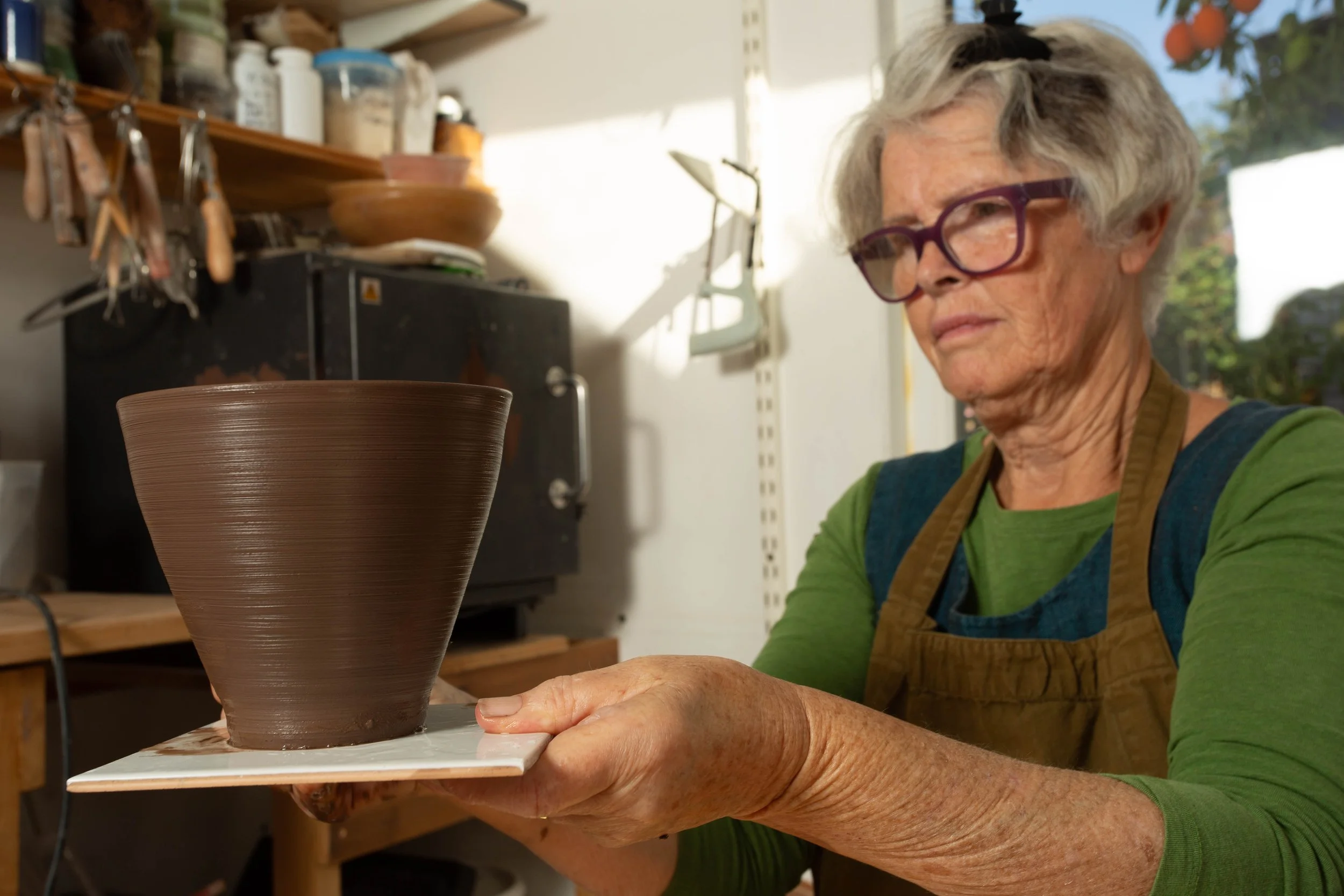
The main clays used for gardenware are terracotta and stoneware. Terracotta is an earthenware clay used for making plant pots and bricks. Stoneware clay is generally used for large garden pieces that are destined for outside year round. Both clays have their place as long as they are cared for appropriately.
Why Mass Produced terracotta pots crack in the frost
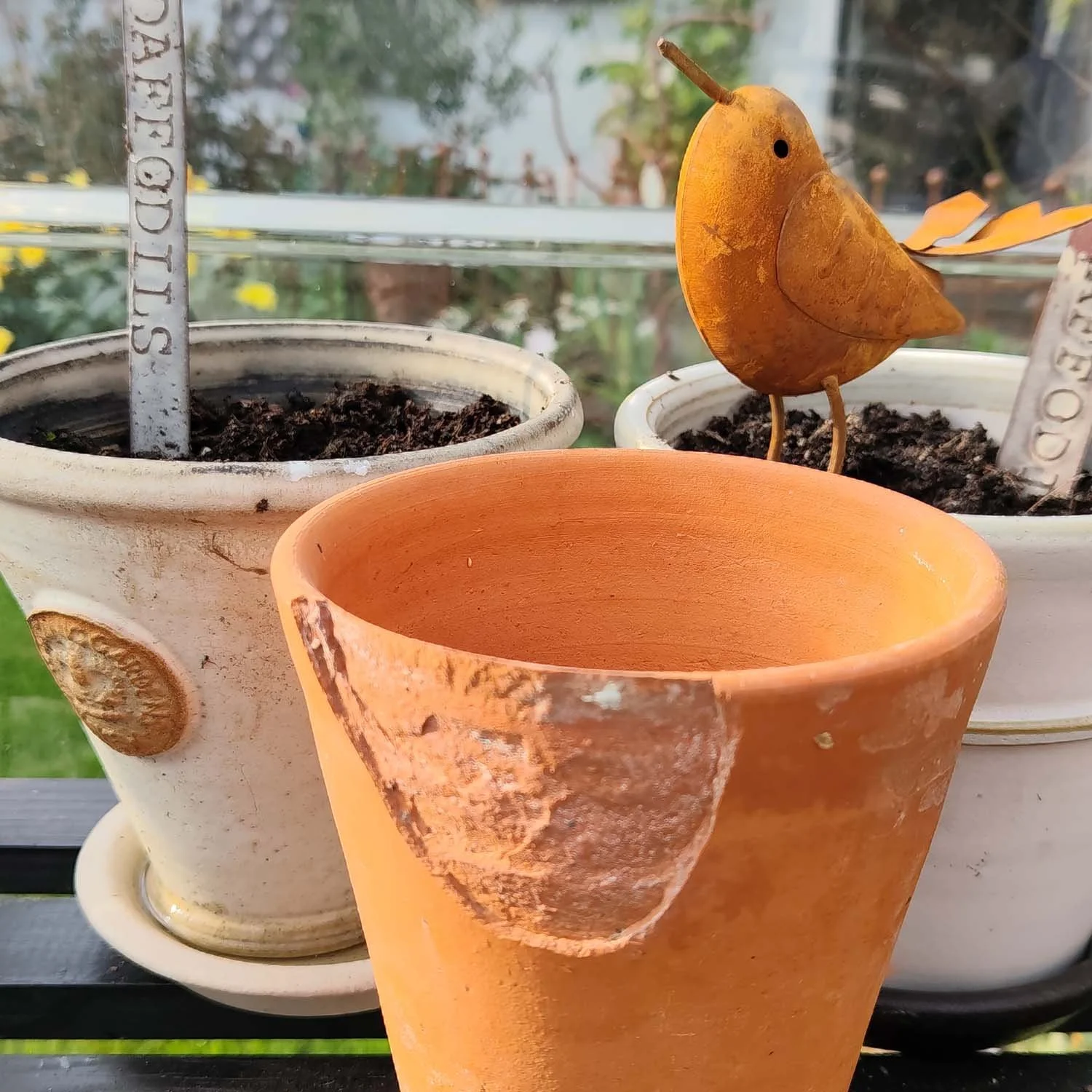
What a hard frost can do to an unprotected terracotta pot.
Terracotta is an ideal material to create plant pots because it lets the plants breathe, and for water to evaporate so that the plant doesn't sit in excess water. It is ideal for summertime when the weather is warm. Mass produced pots we buy in the summertime are cheap, but they are not made to last through a frosty winter. Their firing temperature is traditionally around 1000 degrees centigrade, which means the material retains its porosity. This is an ideal attribute for the summertime, but in wintertime, when it rains, the pot gets wet and is likely to stay damp. Once the frosts come the water in the pot expands causing cracking or layers of clay to ping off.
How a higher firing makes terracotta frost-proof
Using terracotta in a studio setting means that the firing temperature can be adjusted to ensure the clay body matures to vitrification level. This means it is no longer absorbent and shouldn't be affected adversely by frosts. I usually fire terracotta to a much higher temperature which minimises the risks. It also changes the colour to a deeper, richer finish, sometimes highlighted with iron speckles.
Can you glaze terracotta for outdoor use?
Glazing of terracotta is commonly done after an initial bisque firing to 1000 degrees centigrade. Although it creates a glazed layer, it remains inherently porous, and potentially at risk of the glaze layer falling off during a frost.
Why stoneware is made to stay outside all year
Stoneware clay, on the other hand, needs to be fired to well over 1200 degrees centigrade to achieve maturity. The glazing process takes place after bisque firing much like terracotta, but the difference is the final temperature and the type of glaze required that will withstand the higher temperatures in the kiln.
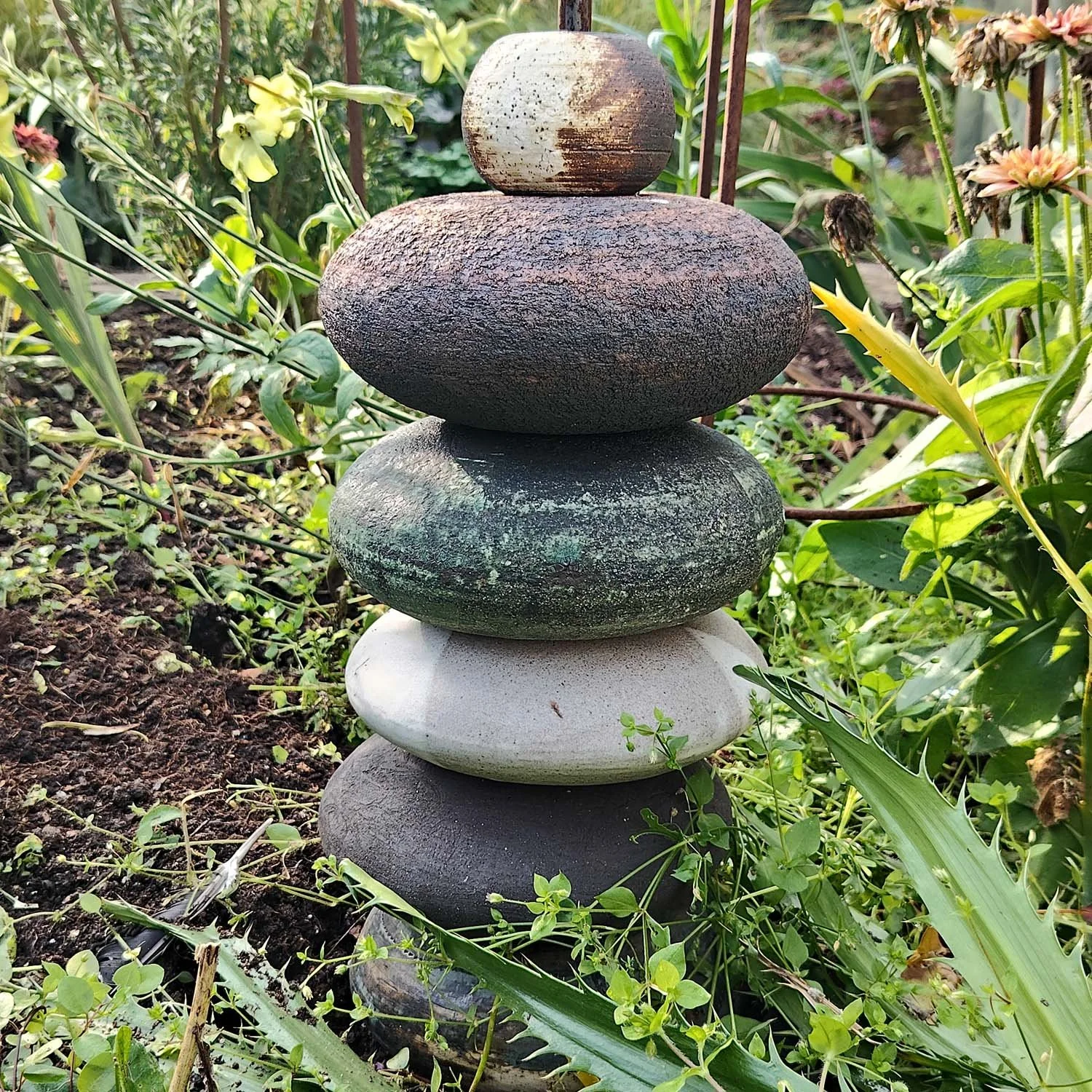
My stacking stones, made from frost-proof stoneware to stay out all year.
Making garden pieces that last
All my garden pieces, from plant labels to stacking stones and cane toppers, are high fired to around 1200 degrees centigrade, so they're frost resistant and ready to stay out in the garden all winter.
Looking for garden pieces that will see you through the winter? Have a look at my handmade plant labels, stacking stones and cane toppers in the shop.
About Sheena: Sheena Bond is a ceramic artist and pottery teacher based in Bishopstoke, near Eastleigh in Hampshire. From her garden studio, she makes frost-resistant ceramics for the garden, including plant labels, stacking stones and cane toppers. She teaches one-to-one and couples' wheel throwing sessions, and runs workshops at Jo Morley Studio in Southampton.
