
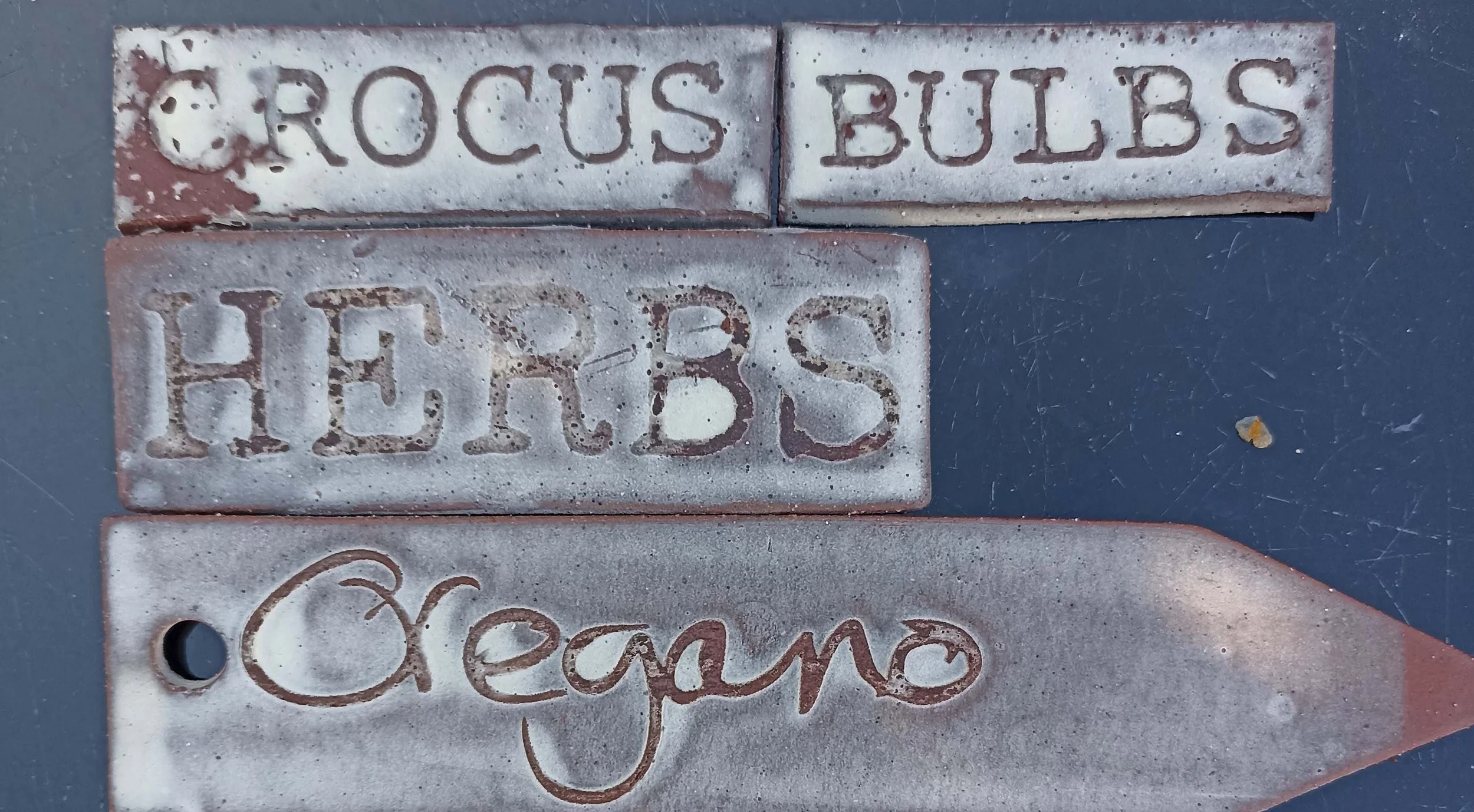
I don't know about you, but I feel frustrated when I have saved a plant or some bulbs and can't identify them. I always place a label with them, but over time the 'permanent' marker pen fades, leaving me with a useless plastic label, telling me nothing.
I have a stylish and practical solution to this with my ceramic markers.
Two designs, for pots or straight into the garden
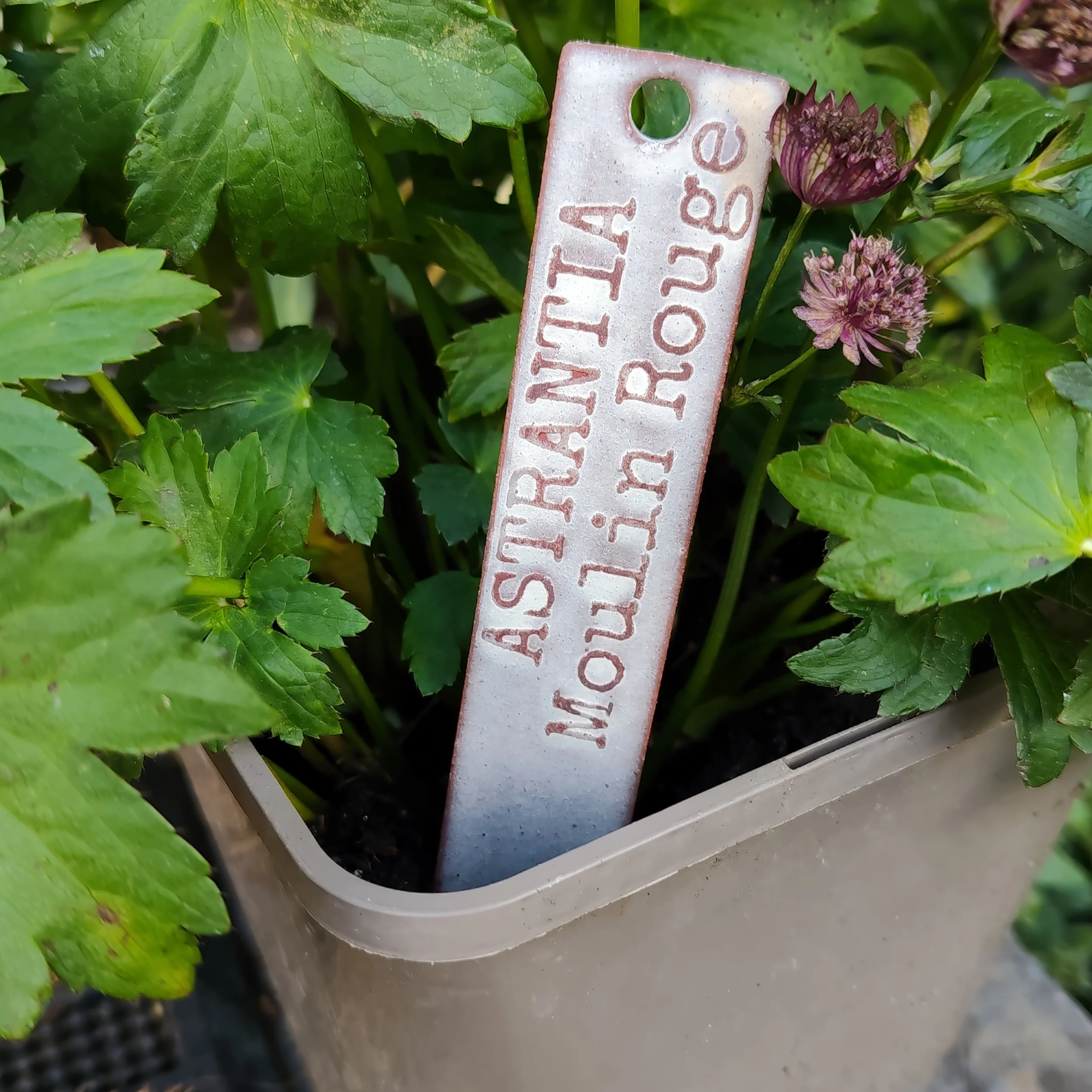
Plant labels for pots
I've designed a range of plant labels that work either in pots, or directly into the garden. There are two distinct designs, both being covered during the workshop.
Once you have signed up for the workshop, you will be asked what plant names you want to produce. I have a large range of common plants, but if you come up with something different, I will do my best to design a label for you. I will need at least five working days before the workshop to enable me to do this.
How ceramic plant labels are made to last
We work with red terracotta clay, and a creamy coloured slip to add contrast and make the lettering stand out. Once dried fully (which takes a few days), I will high fire them to around 1200 degrees centigrade which vitrifies the clay, making it non-porous and frost resistant. I can't guarantee frost-proof, but certainly it reduces the risk.
What happens at the plant label workshop
I bring tools, templates, impression plates and cutting guides, and I demonstrate how to use them at the beginning of the workshop.
Ongoing support is available throughout the session, so you will have a good chance of producing something you feel proud of at the end.
Most people make at least six markers each, sometimes up to 10, it all depends on how fast you work!
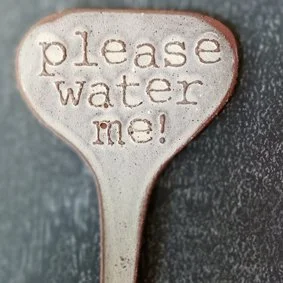
Ideas for using your plant markers, from window boxes to dahlia beds
These markers are ideal for your garden, a window box or plant pots. They also work well in an allotment setting, maybe with veg names, or for your dahlia bed. That's my next project. The dahlia tubers are going to be needing some identification come the spring, so I'm planning to take some photos of them while they are still in flower. Shall I organise them in colours or individual names?
I have Café au Lait and Bacardi, plus some beautiful orange ones. If I successfully identify Café and Bacardi I could have a bed with pastel colours separately to the bold, vibrant oranges, reds and deep pinks. Food for thought!
Firing and collecting your labels
Going back to the workshop, what happens after making the markers? They all need your initials impressed into the clay so that I can identify whose are whose. Finally they are placed on wooden boards for safe onward journey to my kiln at my home studio.
After around four days, they should be dry enough to fire. This takes a couple of days including cooling time. Depending on my firing schedules with other work, they may be fired immediately, otherwise within a couple of weeks.
Collection can be from my home studio at Bishopstoke, or Jo Morley's studio if the workshop took place there.
Coming in spring: a glazed label workshop
There will be another similar workshop within the next few months for those of you who want glazed pieces with more colour. They will not be frost resistant, but fine for the summer months before the frosts arrive. I envisage this workshop to take place from April onwards. Subscribe to my mailing list and I'll let you know when the dates are released.
Want to hear first when new workshop dates are released? Join my mailing list and I'll let you know.
About Sheena: Sheena Bond is a ceramic artist and pottery teacher based in Bishopstoke, near Eastleigh in Hampshire. From her garden studio, she makes frost-resistant ceramics for the garden, including plant labels, stacking stones and mushroom cane toppers. She teaches one-to-one and couples' wheel throwing sessions, and runs workshops at Jo Morley Studio in Southampton.
